A bird watching game to play in any city where there's pigeons
Game Design

Project Overview
Context: passion project
Year: 2026
My Role: Solo Game Dev
Short pitch
Pigeon Quest is a local urban exploration game that invites players to rediscover their city through one of its most overlooked inhabitants: the pigeon.
Concept
The project starts from a simple observation: in cities, most people seem to have only two ways of interacting with pigeons: they either ignore them completely or run after them to make them fly away. Pigeon Quest explores whether a game can create a third, more respectful form of interaction: one based on observation, photography, curiosity, and attention.
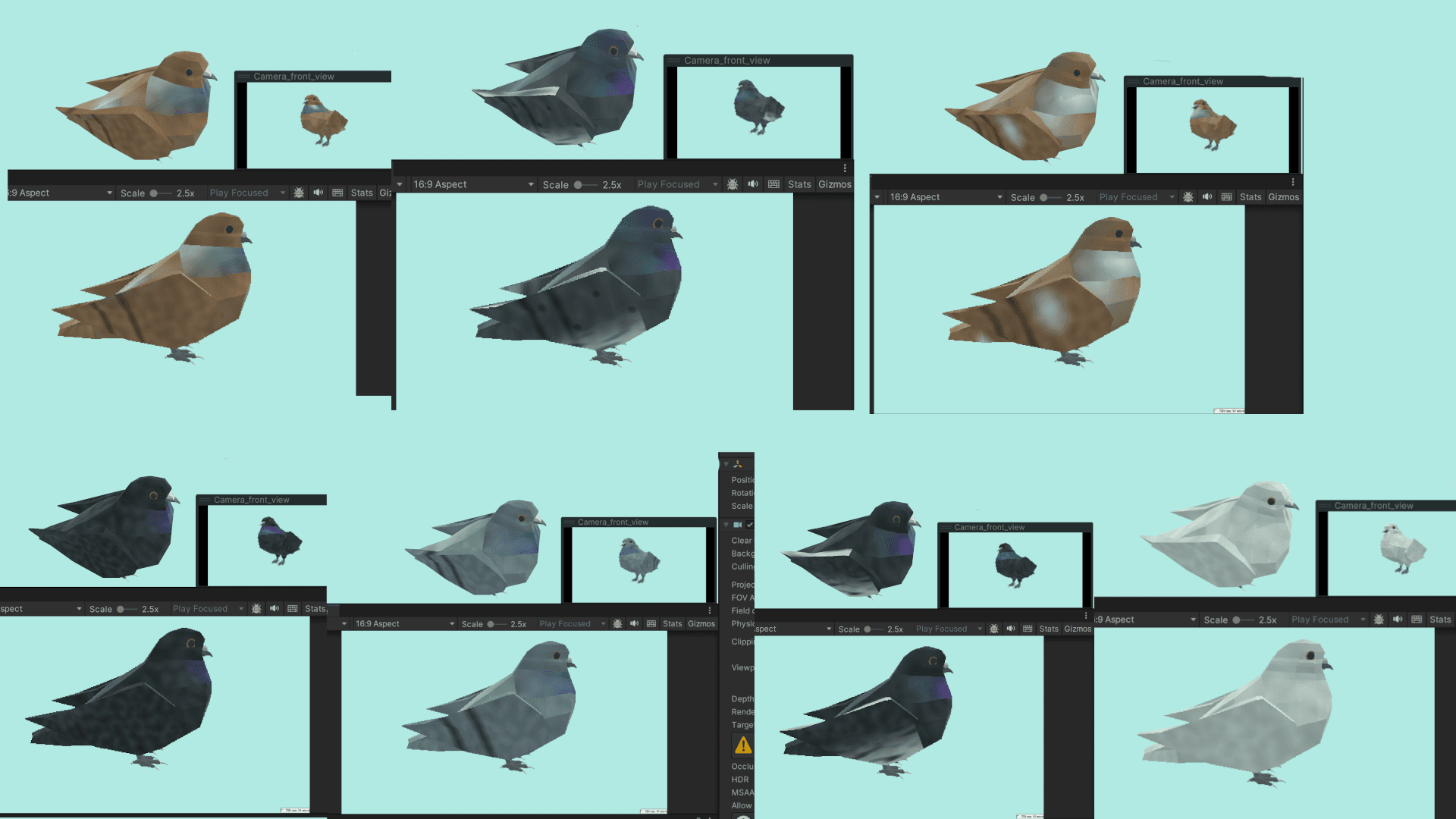
I love pigeons and find them fascinating and super adorable. In particular, I am interested in the incredible variety of colours and patterns found among urban pigeons. Although they are often perceived as identical or simply as part of the background of a city, each bird can look remarkably different. This diversity became the pillar of the game mechanic for Pigeon Quest.
In Zurich, where I am based, the question of how we live with urban pigeons has recently become a subject of public and political discussion with the pigeon strikes. Their large populations can create real challenges for a city: pigeon droppings can damage buildings and infrastructure and lead to significant cleaning and maintenance costs. In the long term, investing in more sustainable and animal-friendly solutions could benefit both cities and pigeons. Managed pigeon lofts, for example, can provide birds with a safe place to live, appropriate food and a controlled breeding environment, with eggs being exchanged to regulate the population like in Basel or Constance in Germany. Through Pigeon Quest, I want to raise awareness for the lives of city pigeons. I believe that before people can become interested in finding and supporting better solutions, they first need to notice the animals themselves. By creating attention, respect and perhaps even sympathy or empathy towards individual pigeons, the project could encourage people to care more about the conditions in which these animals live long term.
This interest also builds on my previous professional experience as a Game and Experience Designer at somebodyelse GmbH, where I worked on VR experiences exploring different living beings and ecosystems in Switzerland. These projects often aimed to create awareness and curiosity towards animals that people might otherwise not encounter closely. Working with VR made me interested in how interactive experiences can change our perception of non-human life. With Pigeon Quest, I want to explore this question from a slightly different direction: instead of bringing people into a virtual representation/translation of nature, I want to use game design to make them pay closer attention to the living beings that are already around them in their everyday urban environment.
Gameplay
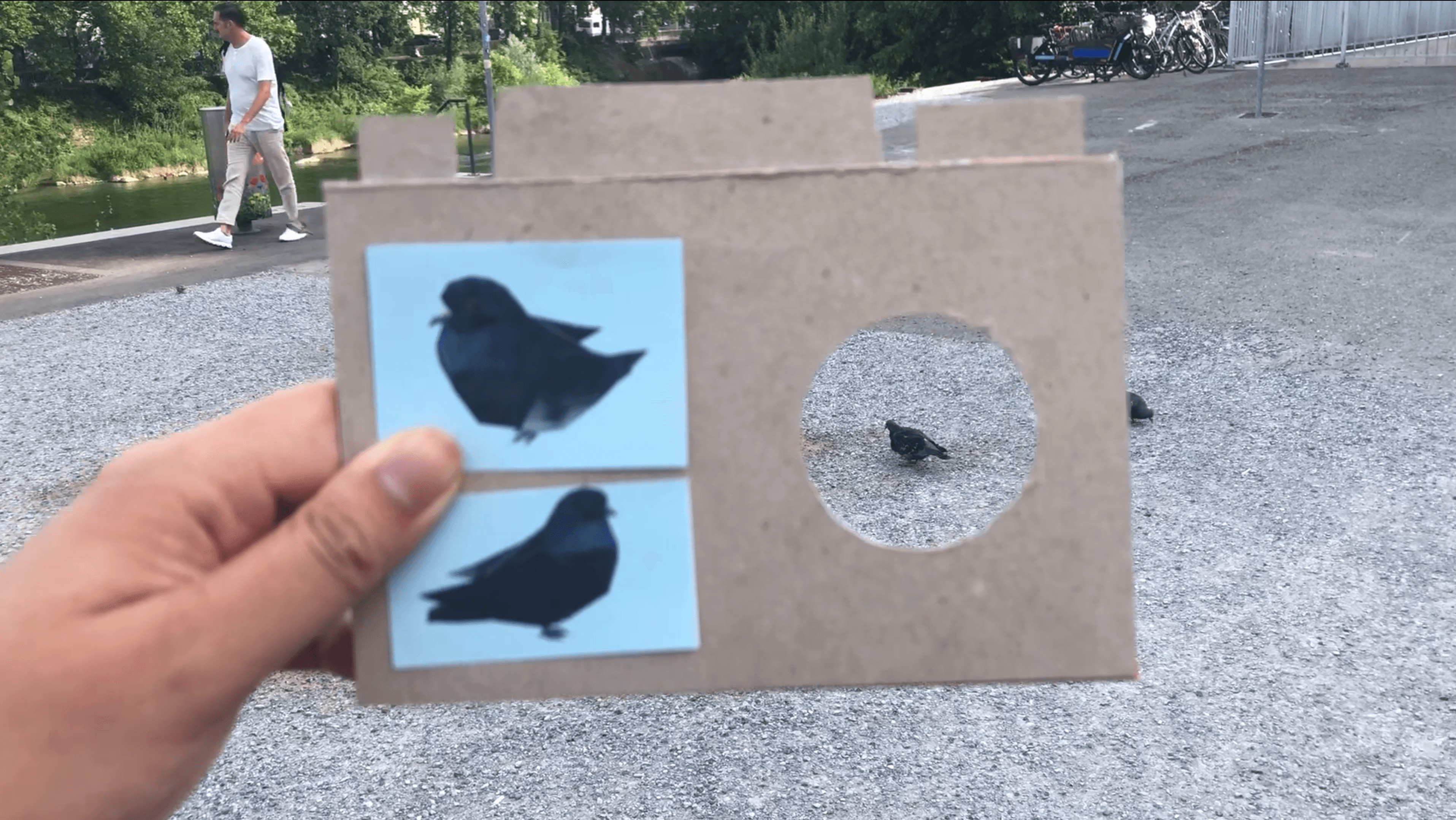
In Pigeon Quest, players receive an image of a procedural generated 3D pigeon. For example, they might be asked to find a grey pigeon with a white spot between its wings.
The player then has to search for a matching pigeon in the real world without chasing, disturbing or otherwise interfering with it. The objective is to take a picture of it.
The game is inspired by the way Pokémon GO encouraged people to rediscover their surroundings. Pokémon GO demonstrated how a game mechanic can motivate people to go on walks, rediscover their city and see the real world through a different lens. Players became more attentive to their environment, moved through public spaces differently and sometimes interacted with other people because of the game.
I would like to explore a similar transformation, but with something that is already present almost everywhere: real birds and the everyday urban environment.
The game therefore connects several forms of gameplay:
Observation: looking more carefully at pigeons and their individual characteristics.
Exploration: moving through the city to search for particular birds.
Physical activity: encouraging players to walk and explore rather than remain in front of a screen.
Social interaction: sharing discoveries and potentially playing it in small teams.
Environmental awareness: becoming more attentive to an animal that is normally overlooked.
An important design principle is that the game should encourage respectful behaviour towards pigeons. The player should never need to catch, touch, frighten or feed a bird to progress. Depending on the format or platform, educational information about pigeons could also be displayed in different places (for example loading screens, or soundtrack…).